
Food insecurity affects far more than what’s on the dinner table. It can shape a family’s ability to pursue education, maintain employment, and build economic mobility.
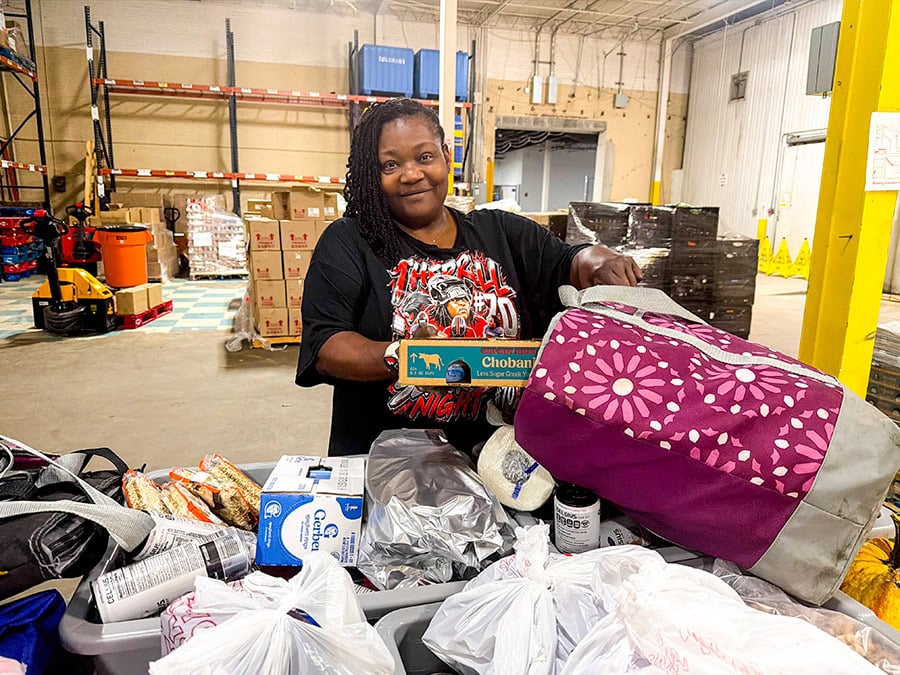
More than a decade ago, Canveta Burke experienced that reality firsthand. Seeking support while raising eight children, she called United Way of Greater Atlanta’s 211 Contact Center and was connected to Urban Recipe’s food co-ops. The connection has helped provide both reliable access to food and a community that has helped her provide healthy meals for her family to this day.
Urban Recipe approaches food insecurity in Atlanta differently. Through free food co-ops funded in part by United Way of Greater Atlanta, those receiving food help pack and distribute the groceries, creating a model creating a model that goes beyond meeting immediate needs to foster dignity, strengthen community, and help families redirect limited resources toward long-term financial stability.
Addressing food insecurity and addressing basic needs is crucial for economic mobility. Unless families are getting their basic needs met, then savings and asset building — those further steps up the ladder — are going to be impossible,” said Charles Sterne, Senior Director of Economic Stability at United Way of Greater Atlanta. “Bringing home enough food for their family is a key building block for the larger economic mobility goals we have for the community.”
Food insecurity in Atlanta
While this model of free food distribution may be unique, stories like Ms. Burke’s are increasingly common in today’s economy.
“A number of people have been taken off SNAP because of new eligibility requirements, and the affordability crisis has only gotten worse. Demand at food banks and food pantries continues to be high, and families are struggling,” said Charles.
According to United Way of Greater Atlanta’s most recent Child Well-Being Index® release, about 3 out of 4 Greater Atlanta families live near a grocery store that accepts Supplemental Nutrition Assistance Program (SNAP) benefits, a federal program that helps eligible families to afford groceries. However, proximity to a store doesn’t automatically mean access to healthy food. For example, many gas stations accept SNAP, but you won’t find fresh foods there needed to help a child grow.
In late October 2025, we saw a crisis when it comes to hunger take place as a government shutdown halted monthly SNAP benefits for families — showing just how fragile Greater Atlanta’s food infrastructure is. But even with the restoration of benefits, families facing food insecurity still struggle to keep their refrigerators full.
Right now, 64% of Georgians facing food insecurity do not even qualify for SNAP according to the Atlanta Community Food Bank. These families earn too much to be eligible, but do not make enough to consistently have enough food to get by. According to our findings from the Child Well-Being Index®, this is unsurprising. Due to recent increases in food costs, for many families, the cost of groceries now rivals the cost of keeping a roof overhead.
And to compound the issue, in the months since SNAP benefits were restored last year, more than 4 million families lost access to food aid due to SNAP eligibility cuts.
» READ MORE: Fighting food insecurity takes all of us — here’s how to help
A lot of the need, unfortunately, is still there — and growing — as people realize how much they really needed the SNAP benefits, and tried to make ends meet in various different ways. What we find is that there are more and more folks that are needing both good food and enough food to make it through the end of the month. It’s hard to know when that’s going to end.”
– Jeremy Lewis, Executive Director of Urban Recipe
For families experiencing food insecurity, knowing where to turn can be just as challenging as finding affordable food itself. Through 211, United Way of Greater Atlanta helps connect families with resources in their communities, from food and housing assistance to childcare and utility support.
But connecting families to help only works when strong community solutions exist to provide that help.
Organizations like Urban Recipe help fill the gap for these families, providing food at no cost through their community food co-op model. And since the government shutdown, United Way of Greater Atlanta continues to invest in food access partners like these.
Food access, with a side of community
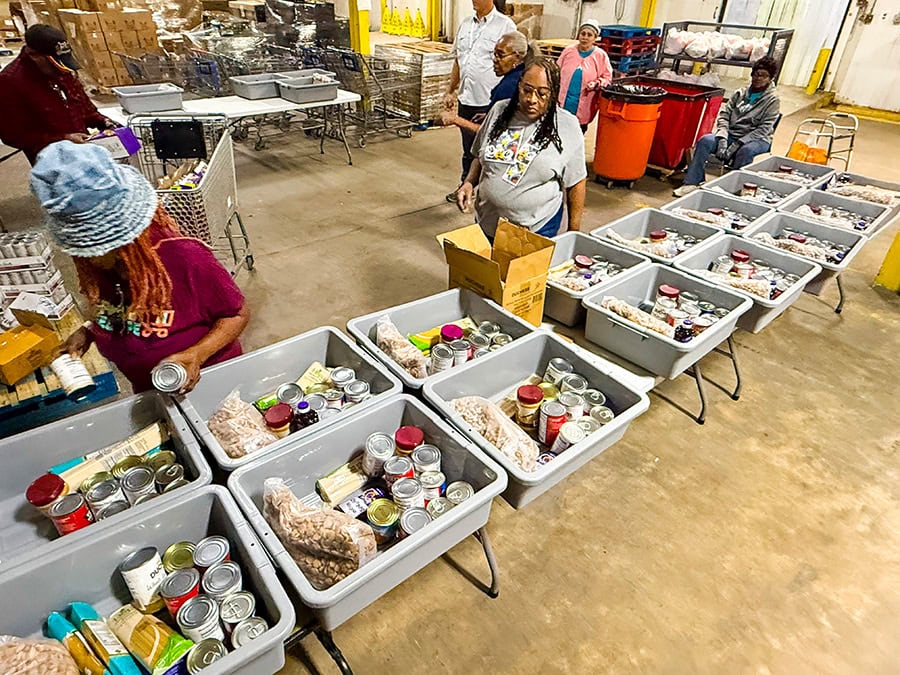
On a recent afternoon, we visited a food co-op meeting, where about 25 people gathered in Urban Recipe’s warehouse, greeting one another before unloading pallets of produce, frozen foods and dry goods. At first glance, it looked like a volunteer project. In reality, they were serving alongside each other to help feed their families. At the end of the meeting, each household would take home roughly a grocery cart’s worth of food.
“They allow you to be a part of it, so you don’t feel like you’re getting a handout. You’re not just coming in, receiving a bag that somebody’s already put together. You help put the food together,” explained Ms. Burke.
Urban Recipe operates two warehouse-based co-ops and eight additional co-ops throughout the community, with plans to launch new locations in senior living high-rises. Last year, with our support, Urban Recipe distributed 673,163 pounds of food, including 96,240 pounds of fresh produce. Those pounds of food become healthy, home cooked meals served up on dinner tables in 58 zip codes across Greater Atlanta, filling kids’ bellies so they can focus on learning and growing, not where their next meal will come from.

The organization sources food from partners including ones we fund like the Atlanta Community Food Bank, Second Helpings, and Concrete Jungle, combining those resources to maximize the quantity and variety of food families receive from a single distribution.
“The great thing about the co-op is it’s a way of integrating a lot of different sources and then getting a great amount of food out to families who need it, so that they’re not having to then hop from place to place,” said Jeremy Lewis, Urban Recipe’s Executive Director.
“We’ve hoped to provide enough food to where families can stabilize their household and not have to feel like they’re in a constant state of wondering where the next meal is going to come.”
Urban Recipe estimates food co-op members save an average of $8,000 to $12,000 per year on groceries, giving them the flexibility in their household budget to redirect their funds to housing, healthcare, education, transportation, and other basic necessities. That breathing room can help families move from managing an immediate need toward greater stability and economic mobility.
For Ms. Burke, both the food and the community unlock something that she hasn’t taken for granted over the years — dignity.
She loves getting to provide creative meals for her kids through the years. One week, the co-op provided pizza crusts, sauce and toppings. She and her children turned them into homemade pizzas. Other favorites have included chicken nachos or spaghetti, the menu varying based on the groceries her family received at the co-op. Recently, the co-op even distributed large pumpkins to the member families just in time for Halloween.
» RELATED: Mini farmers markets arrive at APS schools
For the past 12 years, Urban Recipe has been a reliable source of produce, meat, frozen food, and pantry staples every two weeks for Ms. Burke and her family — but now, she considers her fellow co-op members her family, too. That’s something you just don’t see in a traditional food pantry distribution model.
Today, Burke serves as her co-op’s vice president. Like all co-op leaders, she remains a member herself, continuing to rely on the groceries to help feed her family. As a leader, she’s one of the first to step up and help newcomers feel welcome.
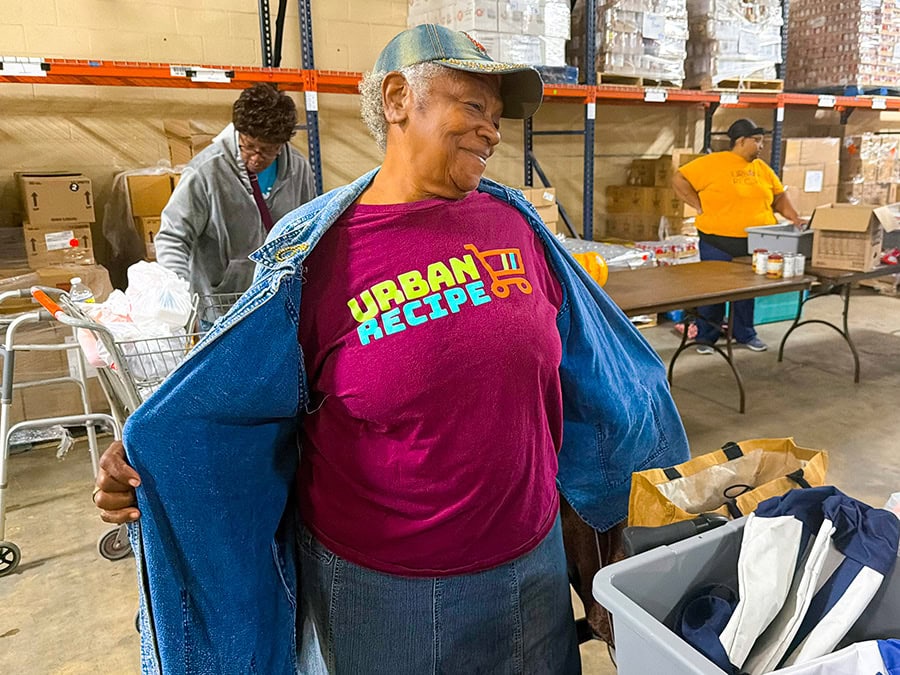
“When I came here, I was very embarrassed because I was in need. But they have a way of showing you dignity and helping you maintain your dignity through receiving the food,” she said. “Urban Recipe is a place where you can become a part of a family.”
At food co-ops, members gain a community, leadership opportunities, and a place where receiving help never comes at the cost of dignity. Families don’t simply receive food. They help provide it for one another.
Help us end food insecurity
Reliable and consistent access to food is a foundation for helping families and communities reach their goals. Without food at home, it’s hard for children to learn in school. It’s difficult for families and seniors to stay healthy. And it’s impossible to focus on much else.
All families deserve to know where their next meal is coming from. When food insecurity leaves families searching for help, United Way of Greater Atlanta works on both ends of the solution: connecting families to resources through 211 and investing in community partners like Urban Recipe that provide long-term support.
But we can’t do it without your help. United is the way we end food insecurity. If you’d like to help make partnerships like this possible, help more families provide a healthy, home-cooked meal for growing kids, and support greater stability across our region, donate to United Way of Greater Atlanta today.