Opens in a new tab

Stronger readers, stronger Clayton

Every reader has a journey. In Clayton, we’re strengthening every step.

There is no single moment a child becomes a reader. It starts with stability at home and early learning experiences, then continues to grow from the support children receive from adults around them and the type of instruction at school.

Because literacy develops over time — and because barriers that kids face are complex, ranging from unexpected moves to unaffordable early learning — supporting young readers requires more than a classroom. This year, United Way of Greater Atlanta is bringing together partners across Clayton County to create the connected support system children need to become strong readers.

Keep reading to find out how we’re working in Clayton County through:

A community ready to lead

When you look at the Child Well-Being Index® map of Greater Atlanta, it’s clear that the odds are stacked against Clayton County students. In education, the county trails the regional average in 3rd grade reading proficiency, 8th grade math proficiency, and high school graduation — but it’s not for lack of students’ potential.
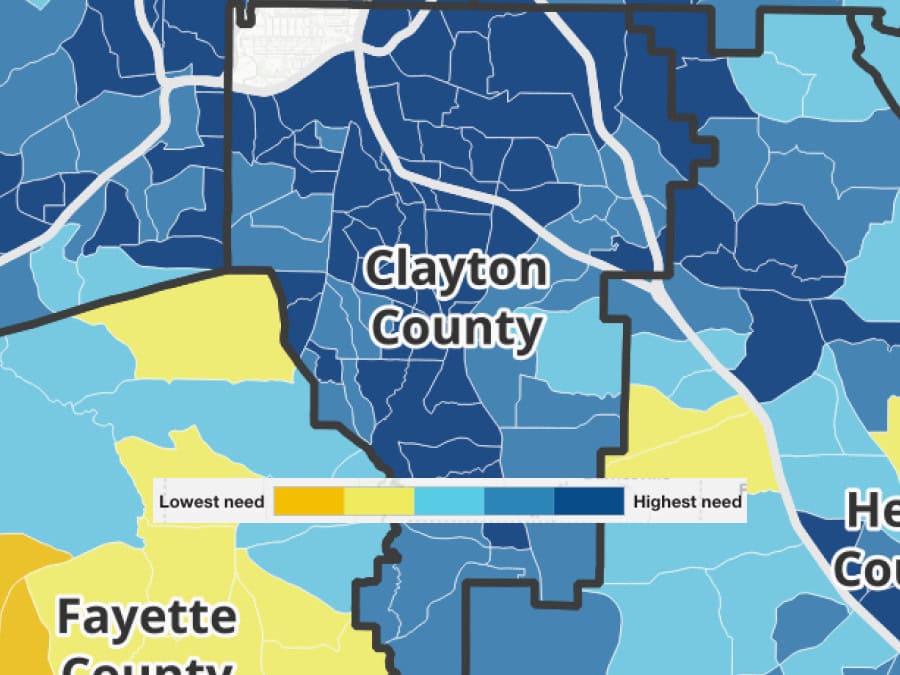
Over half of households in Clayton County either live in poverty or are ALICE families (Asset Limited, Income Constrained, Employed), meaning these families work hard but still struggle afford housing, childcare, transportation, and other necessities. That instability contributes to a reality in which an estimated 1 in 5 students change schools during any given academic year, making academic success far more difficult to achieve.

“The reason why students were transferring from school to school so often was housing affordability,” explained Ebony Johnson, Senior Director of Brighter Futures at United Way of Greater Atlanta. “Families that were moving from apartment complex to apartment complex to apartment complex, from the top end of the county to the lower end of the county, which really disrupted a student’s academic performance.”

District leaders are working to help students stay on track despite the disruptions that can come with frequent moves. Still, those challenges can have lasting effects: only about 46% of Clayton County students are considered college- and career-ready when they graduate, despite a graduation rate of nearly 87%, according to district leaders.

Nearly 9 in 10 Clayton County high schoolers earn a diploma. Fewer than 5 in 10 leave prepared for college or a career.

» RELATED: Forest Park residents steer change

But despite those challenges, Clayton County also has a strong network of district leaders and nonprofit partners who refuse to let statistics define what’s possible for their students.

“It starts with further literacy. This is where it begins,” said Dr. Charmaine Johnson, Chief Academic Officer of Elementary Teaching and Learning at Clayton County Public Schools.

For years, we have helped families access quality early learning through scholarships to early learning centers. Right now, the cost of early learning can exceed the cost of in-state college tuition, saddling parents with difficult decisions.

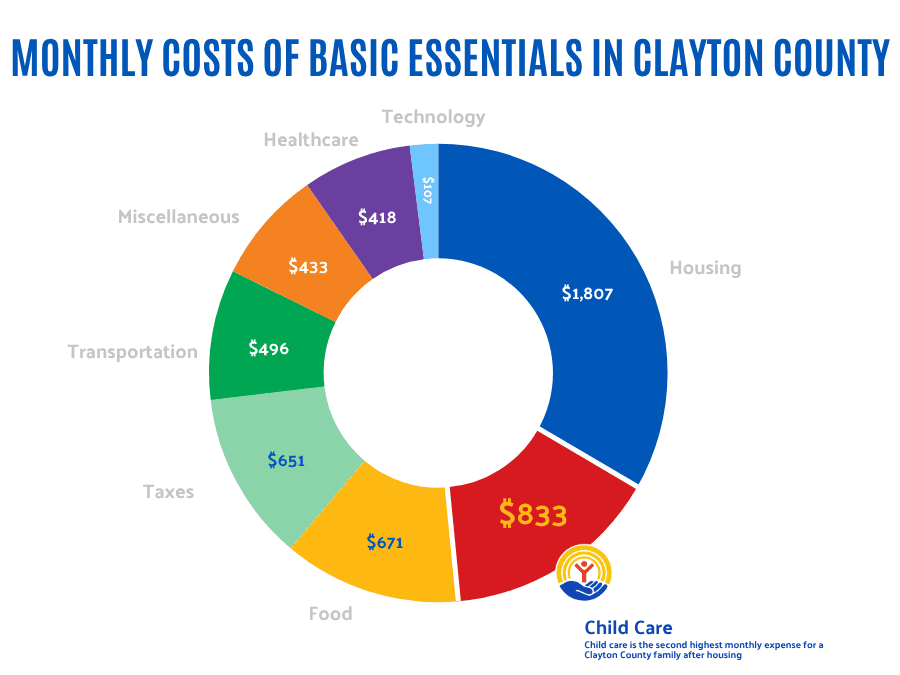
According to United Way’s research on the affordability of everyday expenses, the cost of childcare in Clayton averages $833 a month per child, higher than average for Greater Atlanta. For the majority of families in the county, the numbers don’t add up. 60% of families in Clayton County do not make enough to afford the combined costs of basics like housing, transportation, food, and childcare.
These families face decisions between bills like childcare and other essential expenses, or leaving the workforce altogether to care for their children.

This year, United Way of Greater Atlanta is pledging an additional $1 million in partnership with the Joseph B. Whitehead Foundation to help approximately 60 additional families enroll in quality-rated early learning centers through our partnership with Quality Care for Children. This scholarship not only allows their children to learn foundational skills that increase school readiness, but also gives parents a chance to make an income while their child is in daycare, and increase their family’s financial stability.

Symone Austen, a Clayton County wife and mom received the scholarship for her three-year-old Elijah this fall. She said that childcare is incredibly expensive, especially for children like hers who need extra support.

“Without the scholarship, maintaining the childcare arrangement that best meets Elijah’s needs would place a significant financial strain on our family,” she said. “The scholarship gives us some breathing room.”
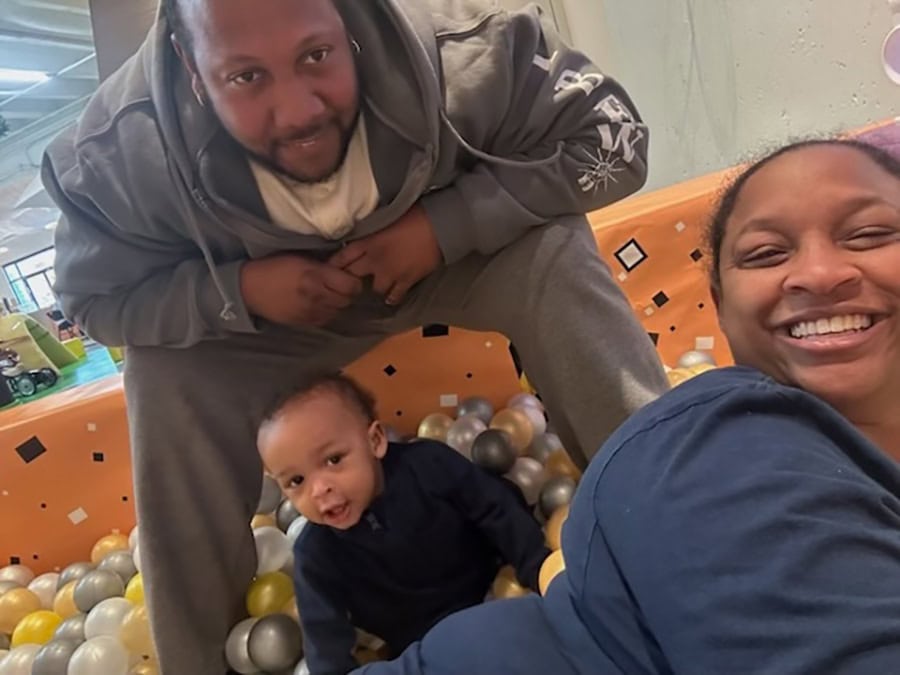
The Austen family received a childcare scholarship funded by United Way of Greater Atlanta, that gave them stability and support for mom Symone to work towards her degree.

A childcare worker herself, working in special education, the scholarship has allowed Symone to continue to be able to work towards a college degree in Applied Behavior Analysis while Elijah learns in school.

I’m most excited about the stability it provides for [my son]. He thrives with consistency and routine, and being able to remain in a familiar environment where he can continue developing his communication, social, and independence skills means a great deal to our family.”

-Symone, Clayton County BOOST scholarship recipient

» RELATED: A BOOST for Jasmine’s Family

Dozens of Clayton families are in the enrollment process currently, and our partners expect the demand to exceed spots available. However, for families who are unable to access a scholarship but still want the benefits that come from high-quality early learning, United Way of Greater Atlanta offers four different Learning Spaces locations that give children and their caregivers access to high-quality early learning experiences based in their community.

Often, you hear about the importance of learning to read by third grade. In Clayton County, school leaders are aiming even earlier, working to ensure more children can read on grade level by first grade. Those early years lay the foundation for everything that follows, from tackling increasingly complex texts to succeeding in later grades.

Our most significant educational investment in Clayton County this year is the launch Literacy and Justice For All. In partnership with Learn for Life and The Rollins Center for Language and Literacy, the initiative combines science-backed reading strategies with coaching for teachers and district leaders, helping schools strengthen literacy instruction from the classroom to the district level. In Marietta City Schools the first district to launch the program in 2021, the percentage of students reading on grade level has outpaced both Greater Atlanta and the state.
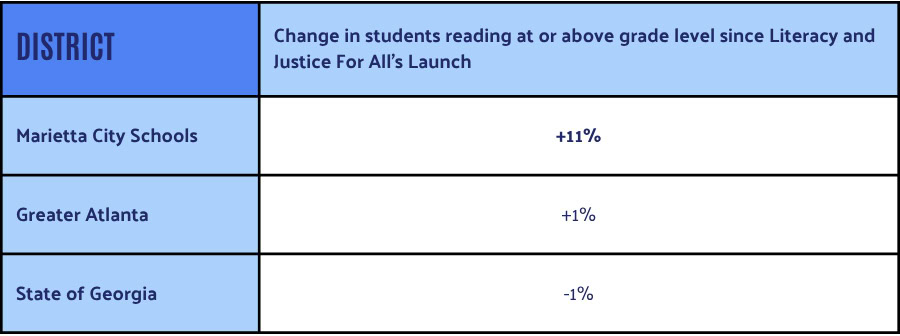
Source: Marietta City Schools

» READ MORE: The program improving reading and comprehension abilities in Marietta and beyond

Beginning with training led by the Rollins Center on the Science of Reading, 17 schools participated in Literacy and Justice For All’s initial rollout in Clayton County last year. This year, with additional funding from United Way of Greater Atlanta, the program is expanding to eight more schools.

By the end of this school year, every school in the district will have literacy-trained educational coaches, principals, and assistant principals, creating a common foundation for literacy instruction across the county.

“It’s giving everybody in the classroom a voice, which is so important. Our special ed students, our ESOL students, all, no matter which subgroup you’re in,” said Dr. Johnson.

Gathia Lewis, a kindergarten teacher at Mount Zion Primary School, began the Rollins Center and United Way of Greater Atlanta’s Literacy and Justice For All training last year. With 17 years of classroom experience and a background in literacy, she was excited to take on this new training to build a classroom of stronger readers.

“When I was in elementary school, I remember being a shy reader. I knew most of the words, but I did not always read with confidence or fluency,” she said. “That experience helps me understand how important it is to create a classroom where students feel safe taking risks, sharing their thinking, and developing confidence as readers.”

For Mrs. Lewis, improvements in both student confidence and testing data from the beginning to the end of the year tell the same story: it’s working.

She remembers one student in particular growing from a quiet and hesitant student to one who participated in class. Even his mother noticed that he was coming home and sharing more about his school day.

“To me, that was evidence that his growing confidence at school was beginning to carry over into his life at home,” said Mrs. Lewis.
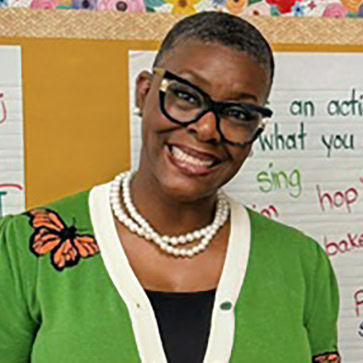
“As a Kindergarten teacher, I see literacy as the foundation for everything students will learn and do. When we help children become confident readers, thinkers, and communicators, we are giving them tools they can carry with them for a lifetime.”

Gathia Lewis
Clayton County Teacher, trained in Literacy and Justice For All

» RELATED: What a school supply list reveals about inequity in the classroom

What a community of readers means

According to Dr. Ebony Lee, Chief Academic Officer in Clayton County Public Schools, when first graders can read, the community wins and options become unlimited.

“Many times our students who do not matriculate as readers, they are limited,” said Dr. Lee. “There are boundaries to what they can experience to the fullest. So building that foundation of literacy, it contributes to their self-esteem, it contributes to their ability to read and tackle complex texts, and have a voice. They will be able to take advantage of resources we have in our backyard.”

Ultimately, the boost in reading will ripple over to other areas in the community — investing in kids is investing in the entire community.

“You know, when the scores go up, then people invest in a school system. We’ll have businesses coming, better residencies. Everything really stems on what’s happening at that foundation. It sounds minor, but it’s major,” said Dr. Lee.

Cori Dickens-Cain, Associate Vice President of Strong Learners at United Way of Greater Atlanta, sees early literacy as one of the ways children gain access to future opportunities, regardless of where they start in life.

We don’t want kids limited by their zip code to determine their destiny. We want them to have all the skills, no matter where they’re born, no matter what family they’re born into, have the opportunity to develop the skills they need to be able to move along that economic mobility ladder. That is the goal: is that they can live the life of their choosing. If they want to be a doctor, if they want to be a neurosurgeon, if they want to be whatever it is, that they have capacity to be able to reach it, and they’re not limited by limited by their exposure and experience or lack thereof,” said Cori.

» RELATED: Meet Sabrina, a literacy leader building a culture of reading in Cobb

A child who receives one of our BOOST scholarships can access early learning experiences that prepare them for school. They can attend a Kinder Camp and step into elementary school with confidence. And then, in the classroom, they’ll have access to teachers trained on the Science of Reading. Meanwhile, existing mental health supports like our SPARK program and Kids Home Initiative supports for families experiencing housing instability also help students stay in school and learn without interruption.  
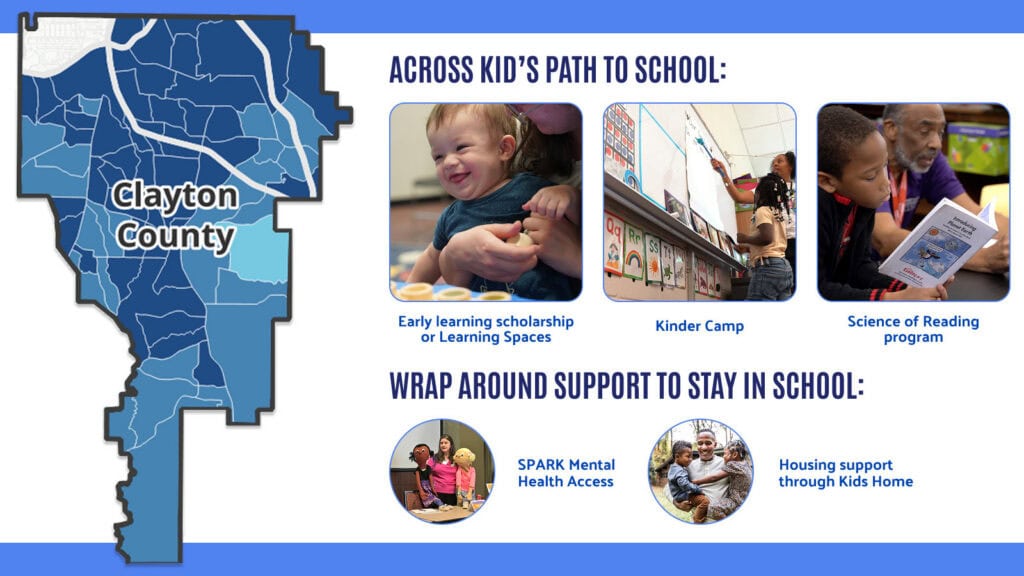
And when children have the support they need to become stronger readers, they are positioned to become the future leaders, innovators, and changemakers their communities need.

If you’d like to join us in creating local solutions not just in Clayton, but across Greater Atlanta, support our work with a donation today.

"*" indicates required fields

This field is for validation purposes and should be left unchanged.
Name*

Thank you !

There is no single moment a child becomes a reader. It starts with stability at home and early learning experiences, then continues to grow from the support children receive from adults around them and the type of instruction at school.

Because literacy develops over time — and because barriers that kids face are complex, ranging from unexpected moves to unaffordable early learning — supporting young readers requires more than a classroom. This year, United Way of Greater Atlanta is bringing together partners across Clayton County to create the connected support system children need to become strong readers.

Keep reading to find out how we’re working in Clayton County through:

A community ready to lead

When you look at the Child Well-Being Index® map of Greater Atlanta, it’s clear that the odds are stacked against Clayton County students. In education, the county trails the regional average in 3rd grade reading proficiency, 8th grade math proficiency, and high school graduation — but it’s not for lack of students’ potential.

Over half of households in Clayton County either live in poverty or are ALICE families (Asset Limited, Income Constrained, Employed), meaning these families work hard but still struggle afford housing, childcare, transportation, and other necessities. That instability contributes to a reality in which an estimated 1 in 5 students change schools during any given academic year, making academic success far more difficult to achieve.

“The reason why students were transferring from school to school so often was housing affordability,” explained Ebony Johnson, Senior Director of Brighter Futures at United Way of Greater Atlanta. “Families that were moving from apartment complex to apartment complex to apartment complex, from the top end of the county to the lower end of the county, which really disrupted a student’s academic performance.”

District leaders are working to help students stay on track despite the disruptions that can come with frequent moves. Still, those challenges can have lasting effects: only about 46% of Clayton County students are considered college- and career-ready when they graduate, despite a graduation rate of nearly 87%, according to district leaders.

Nearly 9 in 10 Clayton County high schoolers earn a diploma. Fewer than 5 in 10 leave prepared for college or a career.

» RELATED: Forest Park residents steer change

But despite those challenges, Clayton County also has a strong network of district leaders and nonprofit partners who refuse to let statistics define what’s possible for their students.

“It starts with further literacy. This is where it begins,” said Dr. Charmaine Johnson, Chief Academic Officer of Elementary Teaching and Learning at Clayton County Public Schools.

For years, we have helped families access quality early learning through scholarships to early learning centers. Right now, the cost of early learning can exceed the cost of in-state college tuition, saddling parents with difficult decisions.

According to United Way’s research on the affordability of everyday expenses, the cost of childcare in Clayton averages $833 a month per child, higher than average for Greater Atlanta. For the majority of families in the county, the numbers don’t add up. 60% of families in Clayton County do not make enough to afford the combined costs of basics like housing, transportation, food, and childcare.

These families face decisions between bills like childcare and other essential expenses, or leaving the workforce altogether to care for their children.

This year, United Way of Greater Atlanta is pledging an additional $1 million in partnership with the Joseph B. Whitehead Foundation to help approximately 60 additional families enroll in quality-rated early learning centers through our partnership with Quality Care for Children. This scholarship not only allows their children to learn foundational skills that increase school readiness, but also gives parents a chance to make an income while their child is in daycare, and increase their family’s financial stability.

Symone Austen, a Clayton County wife and mom received the scholarship for her three-year-old Elijah this fall. She said that childcare is incredibly expensive, especially for children like hers who need extra support.

“Without the scholarship, maintaining the childcare arrangement that best meets Elijah’s needs would place a significant financial strain on our family,” she said. “The scholarship gives us some breathing room.”

The Austen family received a childcare scholarship funded by United Way of Greater Atlanta, that gave them stability and support for mom Symone to work towards her degree.

A childcare worker herself, working in special education, the scholarship has allowed Symone to continue to be able to work towards a college degree in Applied Behavior Analysis while Elijah learns in school.

I’m most excited about the stability it provides for [my son]. He thrives with consistency and routine, and being able to remain in a familiar environment where he can continue developing his communication, social, and independence skills means a great deal to our family.”

-Symone, Clayton County BOOST scholarship recipient

» RELATED: A BOOST for Jasmine’s Family

Dozens of Clayton families are in the enrollment process currently, and our partners expect the demand to exceed spots available. However, for families who are unable to access a scholarship but still want the benefits that come from high-quality early learning, United Way of Greater Atlanta offers four different Learning Spaces locations that give children and their caregivers access to high-quality early learning experiences based in their community.

Often, you hear about the importance of learning to read by third grade. In Clayton County, school leaders are aiming even earlier, working to ensure more children can read on grade level by first grade. Those early years lay the foundation for everything that follows, from tackling increasingly complex texts to succeeding in later grades.

Our most significant educational investment in Clayton County this year is the launch Literacy and Justice For All. In partnership with Learn for Life and The Rollins Center for Language and Literacy, the initiative combines science-backed reading strategies with coaching for teachers and district leaders, helping schools strengthen literacy instruction from the classroom to the district level. In Marietta City Schools the first district to launch the program in 2021, the percentage of students reading on grade level has outpaced both Greater Atlanta and the state.

Source: Marietta City Schools

» READ MORE: The program improving reading and comprehension abilities in Marietta and beyond

Beginning with training led by the Rollins Center on the Science of Reading, 17 schools participated in Literacy and Justice For All’s initial rollout in Clayton County last year. This year, with additional funding from United Way of Greater Atlanta, the program is expanding to eight more schools.

By the end of this school year, every school in the district will have literacy-trained educational coaches, principals, and assistant principals, creating a common foundation for literacy instruction across the county.

“It’s giving everybody in the classroom a voice, which is so important. Our special ed students, our ESOL students, all, no matter which subgroup you’re in,” said Dr. Johnson.

Gathia Lewis, a kindergarten teacher at Mount Zion Primary School, began the Rollins Center and United Way of Greater Atlanta’s Literacy and Justice For All training last year. With 17 years of classroom experience and a background in literacy, she was excited to take on this new training to build a classroom of stronger readers.

“When I was in elementary school, I remember being a shy reader. I knew most of the words, but I did not always read with confidence or fluency,” she said. “That experience helps me understand how important it is to create a classroom where students feel safe taking risks, sharing their thinking, and developing confidence as readers.”

For Mrs. Lewis, improvements in both student confidence and testing data from the beginning to the end of the year tell the same story: it’s working.

She remembers one student in particular growing from a quiet and hesitant student to one who participated in class. Even his mother noticed that he was coming home and sharing more about his school day.

“To me, that was evidence that his growing confidence at school was beginning to carry over into his life at home,” said Mrs. Lewis.

“As a Kindergarten teacher, I see literacy as the foundation for everything students will learn and do. When we help children become confident readers, thinkers, and communicators, we are giving them tools they can carry with them for a lifetime.”

Gathia Lewis
Clayton County Teacher, trained in Literacy and Justice For All

» RELATED: What a school supply list reveals about inequity in the classroom

What a community of readers means

According to Dr. Ebony Lee, Chief Academic Officer in Clayton County Public Schools, when first graders can read, the community wins and options become unlimited.

“Many times our students who do not matriculate as readers, they are limited,” said Dr. Lee. “There are boundaries to what they can experience to the fullest. So building that foundation of literacy, it contributes to their self-esteem, it contributes to their ability to read and tackle complex texts, and have a voice. They will be able to take advantage of resources we have in our backyard.”

Ultimately, the boost in reading will ripple over to other areas in the community — investing in kids is investing in the entire community.

“You know, when the scores go up, then people invest in a school system. We’ll have businesses coming, better residencies. Everything really stems on what’s happening at that foundation. It sounds minor, but it’s major,” said Dr. Lee.

Cori Dickens-Cain, Associate Vice President of Strong Learners at United Way of Greater Atlanta, sees early literacy as one of the ways children gain access to future opportunities, regardless of where they start in life.

We don’t want kids limited by their zip code to determine their destiny. We want them to have all the skills, no matter where they’re born, no matter what family they’re born into, have the opportunity to develop the skills they need to be able to move along that economic mobility ladder. That is the goal: is that they can live the life of their choosing. If they want to be a doctor, if they want to be a neurosurgeon, if they want to be whatever it is, that they have capacity to be able to reach it, and they’re not limited by limited by their exposure and experience or lack thereof,” said Cori.

» RELATED: Meet Sabrina, a literacy leader building a culture of reading in Cobb

A child who receives one of our BOOST scholarships can access early learning experiences that prepare them for school. They can attend a Kinder Camp and step into elementary school with confidence. And then, in the classroom, they’ll have access to teachers trained on the Science of Reading. Meanwhile, existing mental health supports like our SPARK program and Kids Home Initiative supports for families experiencing housing instability also help students stay in school and learn without interruption.  

And when children have the support they need to become stronger readers, they are positioned to become the future leaders, innovators, and changemakers their communities need.

If you’d like to join us in creating local solutions not just in Clayton, but across Greater Atlanta, support our work with a donation today.

Thank you for contacting us.
We have received your message and will get back to you shortly.

Stay Connected

"*" indicates required fields

This field is for validation purposes and should be left unchanged.
Name*
10 digits only
Do you agree to receive recurring texts from United Way of Greater Atlanta? Message frequency may vary. Standard message and data rates may apply based on your mobile plan.*

Thank you for contacting us.

We have received your message and will get back to you soon!