Frozen benefits, empty freezers

When the safety nets break: Filling the gaps during the longest shutdown in history
Atlanta men and women distributing food to end hunger
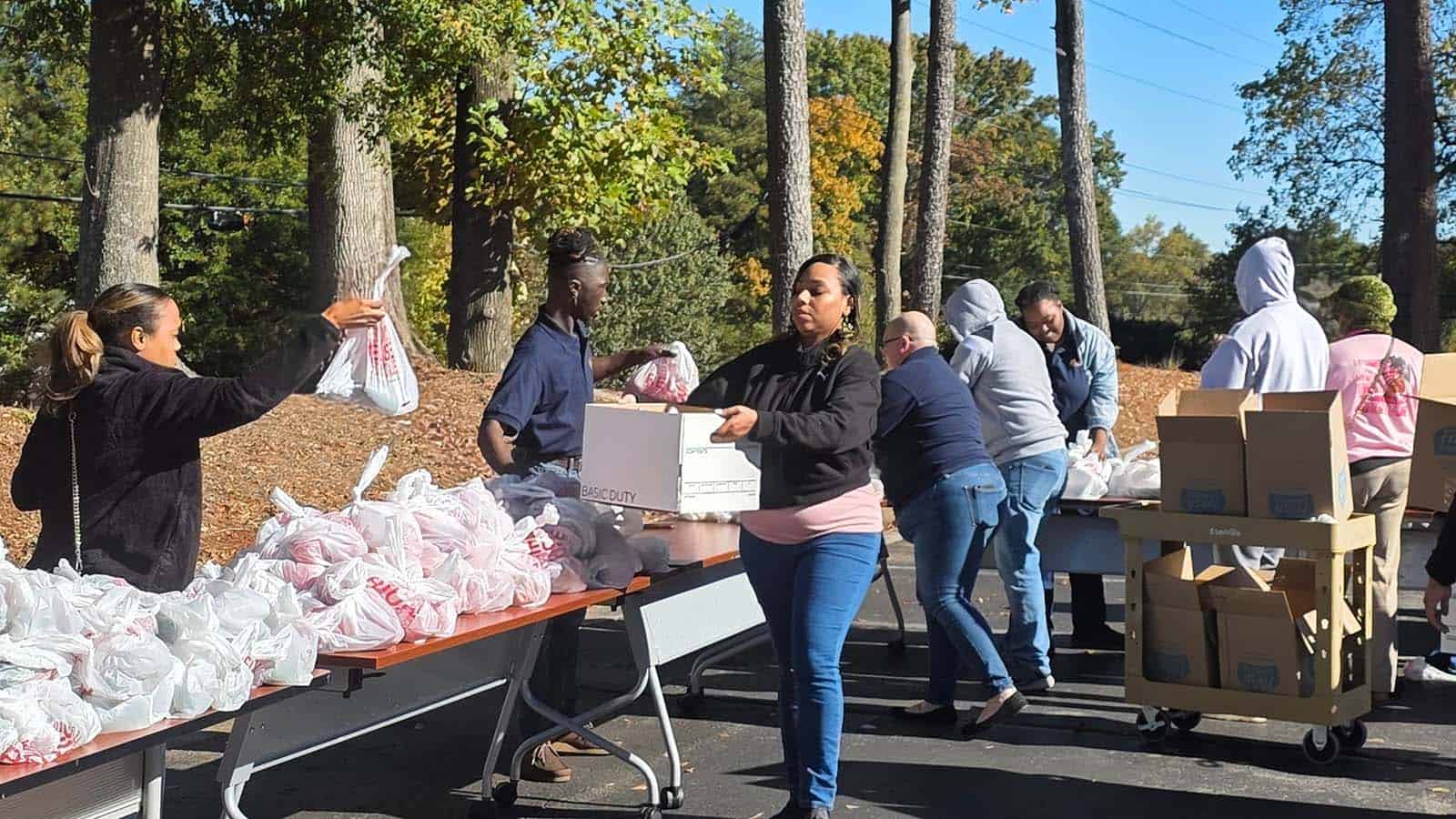
Easter Seals North Georgia distribute food, formula, and diapers to Head Start families impacted by the SNAP disruption, just one of our nonprofit partners trying to fill in the gaps.

When Joannie Hood first heard that her SNAP benefit might be paused during the government shutdown, her first thought was to save the money she had left on her EBT card for a Thanksgiving turkey, to at least preserve the tradition for her kids.  

Now, the worry has shifted from whether her kids will have a good Thanksgiving to whether the food in her freezer will even last that long.  

“I’m afraid every day that I won’t be able to take care of my children, because I really depend on SNAP to feed them,” said Joannie, a former medical worker who became disabled after the COVID-19 pandemic.  

Joannie is one of more than 600,000 individuals across Greater Atlanta who rely on Supplemental Nutrition Assistance Program (SNAP) to put food on the table each month. Those benefits abruptly ended at the end of October. Since then, United Way of Greater Atlanta and our nonprofit partners have witnessed the growing need firsthand. 

Our partner at Community Restoration Project gave Joannie a list of food access resources to help fill in the gap.  

“I got on a waitlist, which I had never heard of before for a food pantry. My appointments were for late November and early December…I’m afraid to cook what I have in my freezer, which now is not a lot,” Joannie shared. “I’m an adult and I can go without certain things, but I worry so much for them not having food.”  

The SNAP gap has acted as a spotlight on an already strained system, and SNAP moms and families bear the brunt of the impact. 

“Food banks have already told me that this year, the demand is higher than it was during the pandemic. I don’t think people realize the level of demand. A lot of it is inflation, but this SNAP disruption is the thing that’s cracked it open,” explained Charles Sterne, Senior Director of Economic Stability at United Way of Greater Atlanta.  

Areas with the lowest Child Well-Being scores (left, in darker purple) often correspond to neighborhoods with the highest percentage of households that rely on federal food assistance (right, in darker green). When SNAP benefits are disrupted, these communities—already facing overlapping barriers to well-being—are hit the hardest.

Classrooms open against the odds 

Another sector was impacted during the government shutdown on November 1, but one that may have gone unnoticed, thanks to a swift response from the nonprofit community. 

The annual Head Start funding grants for Sheltering Arms, Easter Seals of North Georgia, and YMCA of Metro Atlanta—three of Greater Atlanta’s largest early learning programs —also did not come through as planned on November 1. Community Foundation for Greater Atlanta, United Way of Greater Atlanta, and other partners came together in a matter of hours to create an $8.5 million guaranteed loan pool to help the centers stay open for 45 more days.  

Starting November 1, 5,500 children would have been out of school, and more than 800 teachers and staff would have been out of work, if not for this intervention. For many children, Head Start is a main source of daily nutrition. When early learning centers face closure, kids lose both their education and their meals. 

“This is about the children and the two hot meals they receive every day, the high-quality education, and the medical, dental, and mental health screenings that they receive from us,” said Lauren Koontz, President & CEO from the YMCA of Metro Atlanta. “It’s about the parents and the caregivers that have to go to work, and can’t go to work if they don’t have childcare. And it’s about employers who aren’t going to have people show up if they can’t work.” 

>>RELATED: Setting GEEARS in motion 

Donna Davidson, President and CEO of Easter Seals agrees, noting that all the families served by Head Start are also impacted by the SNAP and WIC disruptions. Easter Seals has started distributing diapers, formula, and produce boxes to families to try to ease the burden.  

For older students, United Way of Greater Atlanta will partner with Atlanta Public Schools to put on food drives to help fill the gap for SNAP families through our Hunger Crisis Response Fund.  

The Head Start loan has given Atlanta’s early learning providers a reprieve, but if the government remains shut down, they will be out of funds once again by December 12.  

“We’re able to breathe a little bit, but in this world of things moving so quickly, 45 days will be here before we know it,” said Blythe Robinson, President and CEO of Sheltering Arms.  

Lauren, of the YMCA, says that they’re leaning on lawmakers to “get this done in Washington,” and encourages others concerned about protecting Head Start in Atlanta to contact their elected officials.  

Real people, real needs, real response 

Even if the shutdown and funding is restored, we cannot end hunger overnight. 68% of families in Atlanta who face food insecurity fall above the income threshold and do not qualify for government food assistance like SNAP in the first place. 

Our United Way of Greater Atlanta 211 team responds to 55,000+ requests for food per year from people across our region. Their backgrounds are diverse, including, most recently, an average of 10 furloughed government employees per day. 

“When people are stretching their budget for food, it has a ripple effect and causes them to have to stretch their budget for other needs as well. Comparing July-October last year to the same period this year, requests for our top needs have surged—some by 100% or more. Eviction assistance alone increased by well over 100%,” said Don Zubler, 211 Operations Director.  

Anyone who contacts 211 is connected to resources with dignity—whether moms like Joannie trying to feed their family without SNAP, furloughed federal employees, or even employed workers who still find the price of groceries on top of other bills too much to balance. 

>>RELATED: Tamesha’s 211 Story 

“211 is not just a last line of defense—it’s a resource for someone trying to get ahead of a problem,” said Milton J. Little, President & CEO of United Way of Greater Atlanta in an interview with 11 Alive. “They could say, ‘Here’s the best way for me to ensure the well-being of my family, and how can I do that proactively with one of the community’s most important resources.’” 

In the coming weeks of the shutdown, we will use the call trends from our 211 team and surveys of non-profit partners to convene organizations from different sectors across the city, so that together, we can respond to the hunger crisis quickly.  

But behind every statistic are moms just like Joannie doing what they can to provide for their children.  

She continues checking the news every day to see if the shutdown will end soon, while holding on to hope and trying to distract her children from the reality of their situation 

You can be the reason a child has a meal tonight. Join us in tackling the food access crisis and help end hunger donating today

Thank you !

When Joannie Hood first heard that her SNAP benefit might be paused during the government shutdown, her first thought was to save the money she had left on her EBT card for a Thanksgiving turkey, to at least preserve the tradition for her kids.  

Now, the worry has shifted from whether her kids will have a good Thanksgiving to whether the food in her freezer will even last that long.  

“I’m afraid every day that I won’t be able to take care of my children, because I really depend on SNAP to feed them,” said Joannie, a former medical worker who became disabled after the COVID-19 pandemic.  

Joannie is one of more than 600,000 individuals across Greater Atlanta who rely on Supplemental Nutrition Assistance Program (SNAP) to put food on the table each month. Those benefits abruptly ended at the end of October. Since then, United Way of Greater Atlanta and our nonprofit partners have witnessed the growing need firsthand. 

Our partner at Community Restoration Project gave Joannie a list of food access resources to help fill in the gap.  

“I got on a waitlist, which I had never heard of before for a food pantry. My appointments were for late November and early December…I’m afraid to cook what I have in my freezer, which now is not a lot,” Joannie shared. “I’m an adult and I can go without certain things, but I worry so much for them not having food.”  

The SNAP gap has acted as a spotlight on an already strained system, and SNAP moms and families bear the brunt of the impact. 

“Food banks have already told me that this year, the demand is higher than it was during the pandemic. I don’t think people realize the level of demand. A lot of it is inflation, but this SNAP disruption is the thing that’s cracked it open,” explained Charles Sterne, Senior Director of Economic Stability at United Way of Greater Atlanta.  

Areas with the lowest Child Well-Being scores (left, in darker purple) often correspond to neighborhoods with the highest percentage of households that rely on federal food assistance (right, in darker green). When SNAP benefits are disrupted, these communities—already facing overlapping barriers to well-being—are hit the hardest.

Classrooms open against the odds 

Another sector was impacted during the government shutdown on November 1, but one that may have gone unnoticed, thanks to a swift response from the nonprofit community. 

The annual Head Start funding grants for Sheltering Arms, Easter Seals of North Georgia, and YMCA of Metro Atlanta—three of Greater Atlanta’s largest early learning programs —also did not come through as planned on November 1. Community Foundation for Greater Atlanta, United Way of Greater Atlanta, and other partners came together in a matter of hours to create an $8.5 million guaranteed loan pool to help the centers stay open for 45 more days.  

Starting November 1, 5,500 children would have been out of school, and more than 800 teachers and staff would have been out of work, if not for this intervention. For many children, Head Start is a main source of daily nutrition. When early learning centers face closure, kids lose both their education and their meals. 

“This is about the children and the two hot meals they receive every day, the high-quality education, and the medical, dental, and mental health screenings that they receive from us,” said Lauren Koontz, President & CEO from the YMCA of Metro Atlanta. “It’s about the parents and the caregivers that have to go to work, and can’t go to work if they don’t have childcare. And it’s about employers who aren’t going to have people show up if they can’t work.” 

>>RELATED: Setting GEEARS in motion 

Donna Davidson, President and CEO of Easter Seals agrees, noting that all the families served by Head Start are also impacted by the SNAP and WIC disruptions. Easter Seals has started distributing diapers, formula, and produce boxes to families to try to ease the burden.  

For older students, United Way of Greater Atlanta will partner with Atlanta Public Schools to put on food drives to help fill the gap for SNAP families through our Hunger Crisis Response Fund.  

The Head Start loan has given Atlanta’s early learning providers a reprieve, but if the government remains shut down, they will be out of funds once again by December 12.  

“We’re able to breathe a little bit, but in this world of things moving so quickly, 45 days will be here before we know it,” said Blythe Robinson, President and CEO of Sheltering Arms.  

Lauren, of the YMCA, says that they’re leaning on lawmakers to “get this done in Washington,” and encourages others concerned about protecting Head Start in Atlanta to contact their elected officials.  

Real people, real needs, real response 

Even if the shutdown and funding is restored, we cannot end hunger overnight. 68% of families in Atlanta who face food insecurity fall above the income threshold and do not qualify for government food assistance like SNAP in the first place. 

Our United Way of Greater Atlanta 211 team responds to 55,000+ requests for food per year from people across our region. Their backgrounds are diverse, including, most recently, an average of 10 furloughed government employees per day. 

“When people are stretching their budget for food, it has a ripple effect and causes them to have to stretch their budget for other needs as well. Comparing July-October last year to the same period this year, requests for our top needs have surged—some by 100% or more. Eviction assistance alone increased by well over 100%,” said Don Zubler, 211 Operations Director.  

Anyone who contacts 211 is connected to resources with dignity—whether moms like Joannie trying to feed their family without SNAP, furloughed federal employees, or even employed workers who still find the price of groceries on top of other bills too much to balance. 

>>RELATED: Tamesha’s 211 Story 

“211 is not just a last line of defense—it’s a resource for someone trying to get ahead of a problem,” said Milton J. Little, President & CEO of United Way of Greater Atlanta in an interview with 11 Alive. “They could say, ‘Here’s the best way for me to ensure the well-being of my family, and how can I do that proactively with one of the community’s most important resources.’” 

In the coming weeks of the shutdown, we will use the call trends from our 211 team and surveys of non-profit partners to convene organizations from different sectors across the city, so that together, we can respond to the hunger crisis quickly.  

But behind every statistic are moms just like Joannie doing what they can to provide for their children.  

She continues checking the news every day to see if the shutdown will end soon, while holding on to hope and trying to distract her children from the reality of their situation 

You can be the reason a child has a meal tonight. Join us in tackling the food access crisis and help end hunger donating today

Thank you for contacting us.
We have received your message and will get back to you shortly.

Thank you.

Frozen benefits, empty freezers

[]

Thank you for contacting us.

We have received your message and will get back to you soon!

Contact us