Mini farmers markets arrive at APS schools

United Way of Greater Atlanta and Community Farmers Markets team up to close the hunger gap
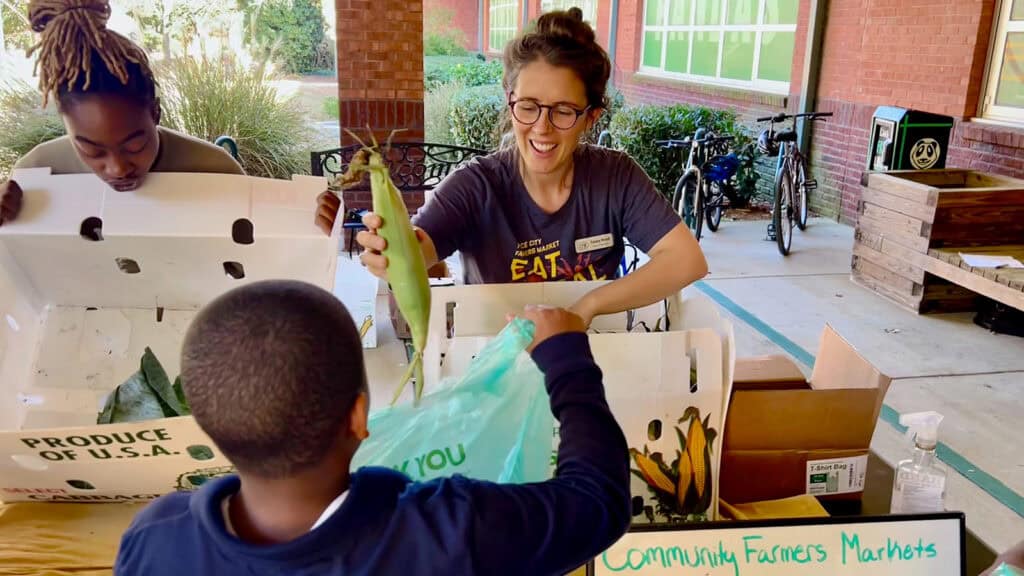
Farmer’s Market volunteer hands fresh corn to a student as part of a creative United Way “SNAP gap” reduction program in Atlanta

“Roots, stem, leaves, flowers, fruits, and seeds,” sang the kids at Parkside Elementary School while they waited to line up and get their own bag of fresh fruits and vegetables at the free produce market outside their school the week before Thanksgiving break.  

This year, United Way of Greater Atlanta partnered with Community Farmers Markets to bring a miniature monthly farmers market into three Title I Atlanta Public Schools facing food insecurity, making free fresh, healthy food accessible. They’re targeting children affected by the so-called SNAP gap—the difference between those facing food insecurity and those actually enrolled in the nationwide Supplemental Nutrition Assistance Program once known as food stamps. 

Jenna Mobley, Community Farmers Markets’ Director of Education and Programs, visits classrooms before the monthly market to teach standards-based lessons about nutrition, plants, and farming to get kids excited about the markets. 

In a class of second graders, she asked students to place their hands over their heads to pretend to be under a tent.  

“Imagine that these lights are the sun. Imagine that this tile and this carpet are green grass. Imagine that under each tent is a farmer selling something that they grew, or a baker or maker selling something they made,” she said to the classroom of young produce shoppers. “Maybe you’re selling carrots and cabbage and kale and eggs and bread and honey—yummy things under all of these tents.” 
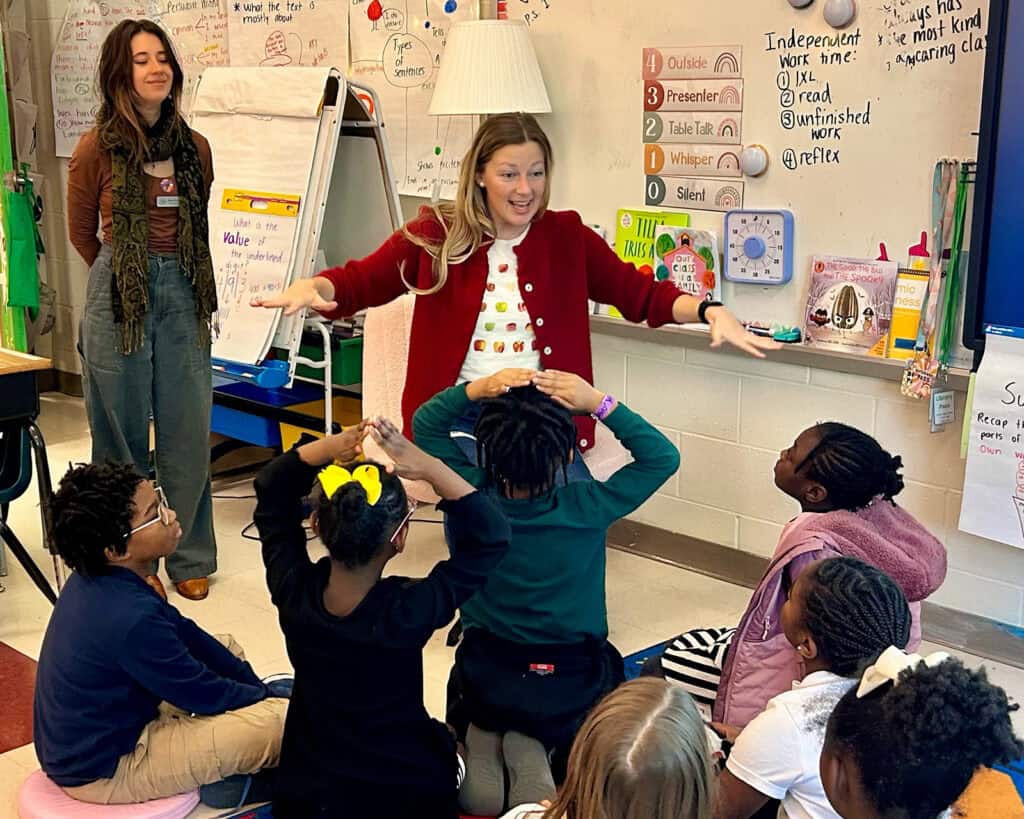
Students facing food insecurity learn about fresh vegetables and farming before they visit the free produce market.

For many students, plenty of whom are personally impacted by the SNAP gap, this was their first time hearing about a farmers’ market.  

Outside, the students, parents, and school staff selected produce provided by Concrete Jungle, an organization that rescues surplus food from local and regional farmers. They also were able to try a recipe using this week’s produce at a chef demonstration. This week, sweet potato chili was on the menu. 

“It has beans and corn and peppers!” said one third grader, holding up his bag of vegetables to show off. His favorite? Definitely the corn. He tells us excitedly about how maybe his family will visit the “big farmers market” this weekend too.  
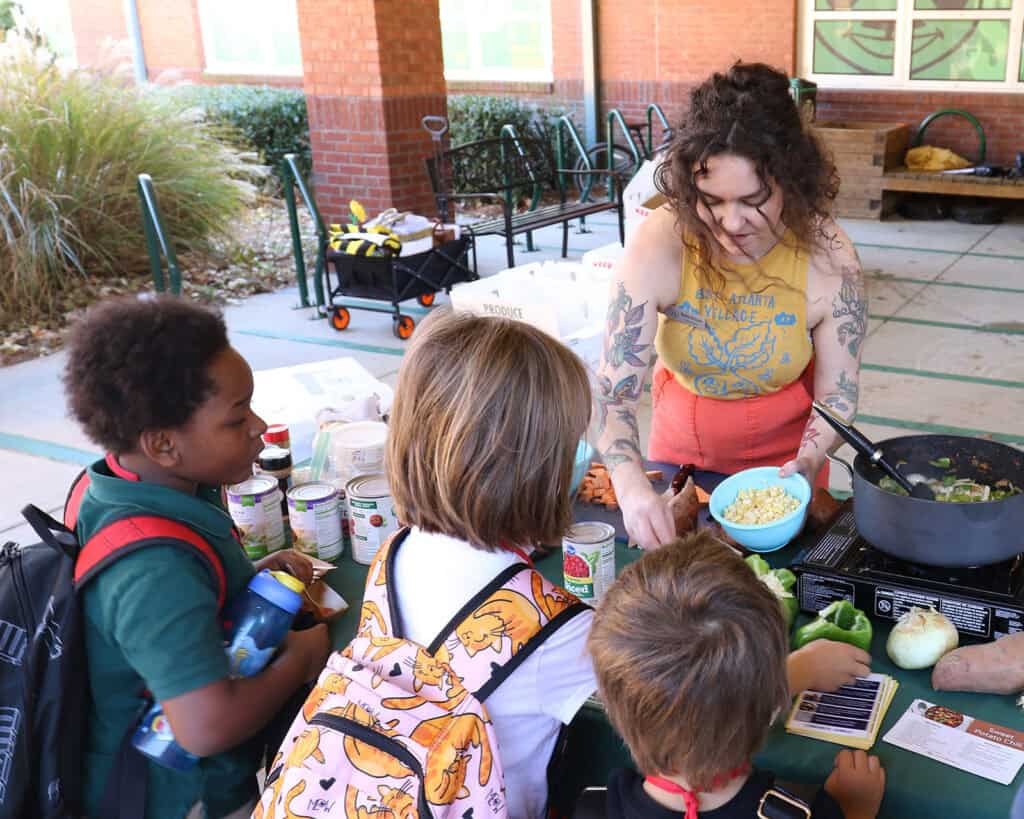
Community Farmers Markets address the SNAP gap by providing a cooking demonstration.

“It’s pretty cool to have access to vegetables through the school,” said Sarah Roberts, a mom of a third grader. Picking up a full bag each month during afternoon pick up has become a special monthly tradition with her son.  

For the families though, the experience provides more than just a fun classroom lesson and a chance to try new vegetables—it bridges a real food access gap, a need exacerbated by the SNAP disruption earlier in November. 

>>READ MORE: When the safety nets break: Filling the gaps during the longest shutdown in history 

This free school market was the first one held at Parkside Elementary School since the recent government shutdown. Community Farmers Markets Director of Operations & Vendor Support Casey Hood said she had never seen the produce run out so quickly—a clear sign that families rely on this resource more than ever.  
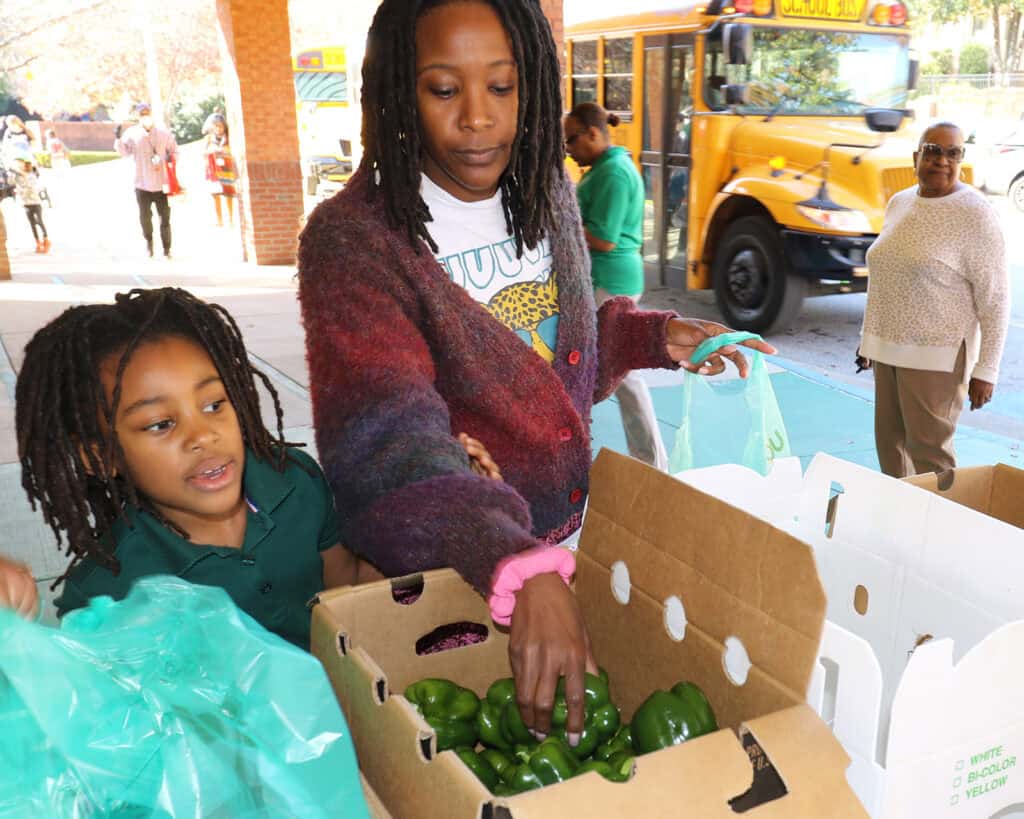
Families shop at the free produce market, hosted at Title 1 schools to combat the SNAP gap and food insecurity.

“We are intentionally bringing them to schools that have a high SNAP recipient percentage of families within the schools. We’re out monthly, and we try to do this before a big holiday break,” said Casey. “Next week, everybody’s out for Thanksgiving. For folks who are a little more dependent on that school lunch, they can come here and their families can get free produce.”  

All families at the free produce market also will get a $5 voucher to spend at any of Community Farmers Markets locations, and for SNAP recipients, the markets match the amount of EBT dollars spent on fresh fruits and vegetables.  

For United Way, supporting these school-based markets is just one way we aim to make food more accessible to families where they are.  

We know that while most SNAP benefits have been restored, Greater Atlanta families continue to face a hunger crisis. Nearly 7 out of 10 families we serve facing food insecurity did not qualify for food assistance programs to begin with. That’s why creative solutions like school-based free produce markets are essential to help close the SNAP gap.  

If you would like to support programs like these that put food and other basic necessities in reach for Greater Atlanta families, please support our mission by donating today.  

Thank you !

“Roots, stem, leaves, flowers, fruits, and seeds,” sang the kids at Parkside Elementary School while they waited to line up and get their own bag of fresh fruits and vegetables at the free produce market outside their school the week before Thanksgiving break.  

This year, United Way of Greater Atlanta partnered with Community Farmers Markets to bring a miniature monthly farmers market into three Title I Atlanta Public Schools facing food insecurity, making free fresh, healthy food accessible. They’re targeting children affected by the so-called SNAP gap—the difference between those facing food insecurity and those actually enrolled in the nationwide Supplemental Nutrition Assistance Program once known as food stamps. 

Jenna Mobley, Community Farmers Markets’ Director of Education and Programs, visits classrooms before the monthly market to teach standards-based lessons about nutrition, plants, and farming to get kids excited about the markets. 

In a class of second graders, she asked students to place their hands over their heads to pretend to be under a tent.  

“Imagine that these lights are the sun. Imagine that this tile and this carpet are green grass. Imagine that under each tent is a farmer selling something that they grew, or a baker or maker selling something they made,” she said to the classroom of young produce shoppers. “Maybe you’re selling carrots and cabbage and kale and eggs and bread and honey—yummy things under all of these tents.” 

Students facing food insecurity learn about fresh vegetables and farming before they visit the free produce market.

For many students, plenty of whom are personally impacted by the SNAP gap, this was their first time hearing about a farmers’ market.  

Outside, the students, parents, and school staff selected produce provided by Concrete Jungle, an organization that rescues surplus food from local and regional farmers. They also were able to try a recipe using this week’s produce at a chef demonstration. This week, sweet potato chili was on the menu. 

“It has beans and corn and peppers!” said one third grader, holding up his bag of vegetables to show off. His favorite? Definitely the corn. He tells us excitedly about how maybe his family will visit the “big farmers market” this weekend too.  

Community Farmers Markets address the SNAP gap by providing a cooking demonstration.

“It’s pretty cool to have access to vegetables through the school,” said Sarah Roberts, a mom of a third grader. Picking up a full bag each month during afternoon pick up has become a special monthly tradition with her son.  

For the families though, the experience provides more than just a fun classroom lesson and a chance to try new vegetables—it bridges a real food access gap, a need exacerbated by the SNAP disruption earlier in November. 

>>READ MORE: When the safety nets break: Filling the gaps during the longest shutdown in history 

This free school market was the first one held at Parkside Elementary School since the recent government shutdown. Community Farmers Markets Director of Operations & Vendor Support Casey Hood said she had never seen the produce run out so quickly—a clear sign that families rely on this resource more than ever.  

Families shop at the free produce market, hosted at Title 1 schools to combat the SNAP gap and food insecurity.

“We are intentionally bringing them to schools that have a high SNAP recipient percentage of families within the schools. We’re out monthly, and we try to do this before a big holiday break,” said Casey. “Next week, everybody’s out for Thanksgiving. For folks who are a little more dependent on that school lunch, they can come here and their families can get free produce.”  

All families at the free produce market also will get a $5 voucher to spend at any of Community Farmers Markets locations, and for SNAP recipients, the markets match the amount of EBT dollars spent on fresh fruits and vegetables.  

For United Way, supporting these school-based markets is just one way we aim to make food more accessible to families where they are.  

We know that while most SNAP benefits have been restored, Greater Atlanta families continue to face a hunger crisis. Nearly 7 out of 10 families we serve facing food insecurity did not qualify for food assistance programs to begin with. That’s why creative solutions like school-based free produce markets are essential to help close the SNAP gap.  

If you would like to support programs like these that put food and other basic necessities in reach for Greater Atlanta families, please support our mission by donating today.  

Thank you for contacting us.
We have received your message and will get back to you shortly.

Thank you.

Mini farmers markets arrive at APS schools

[]

Thank you for contacting us.

We have received your message and will get back to you soon!

Contact us