College didn’t feel possible — until it did

How the right support helped Christina take her first step toward college

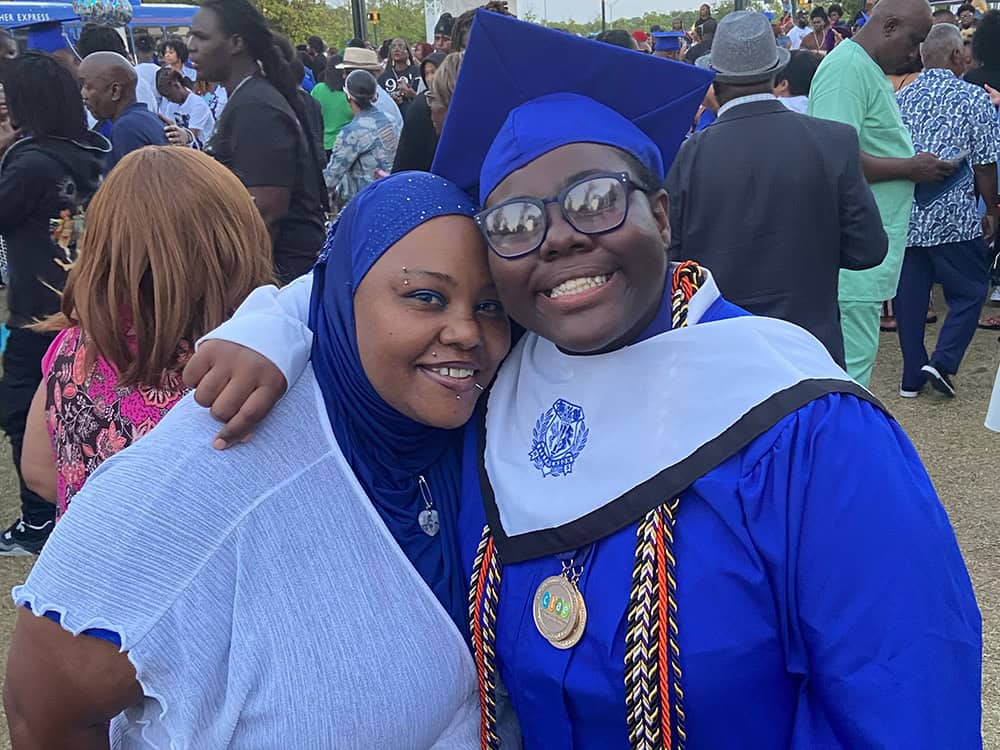
Christina Ligons is wrapping up her freshman year of college. She’s completed classes like history and psychology — that one was difficult at first, but she grew to enjoy it. Outside of class, she just joined the student government association as the secretary of activities, and she takes photos around campus and works on podcasts with the MCTV club. She’s studying history education to become a teacher. A public relations minor is also on the table, just to keep her options open.

Just a year ago, as a senior in high school, she didn’t even think she would be in school.

Christina is one of the hundreds of high school seniors we help reach college each year through our College Bound program. It’s so much more than help with forms and deadlines — it’s connecting students to advisors who have been in their shoes and can show them what’s possible. They’re the reason Christina is at Miles College today.

The next step after high school matters.

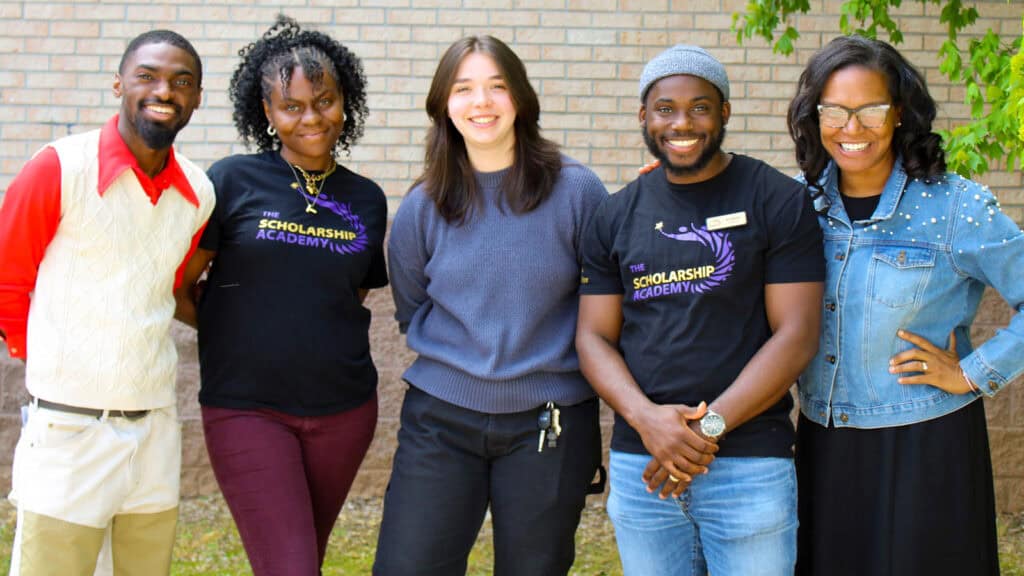
United Way of Greater Atlanta partners with The Scholarship Academy and Learn4Life to put College Bound advisors in eight Title I high schools around Greater Atlanta.

For these high school seniors on the brink of graduation, the stakes are high. By 2031, 85% of jobs in Georgia will require some education beyond high school. Across their lifetime, college students will earn about two and a half times more than their peers with only a high school diploma — like it or not, a postsecondary education remains one of the most reliable ways to help young adults earn more, find stable work, and create a stronger financial future than the one they grew up with. But currently, only 27% of students in Greater Atlanta are on track to earn a degree or credential.

>> RELATED: Fresh-Squeezed Talent: Jasiah’s Apprenticeship Story

“When I was first filling out the FAFSA, I didn’t think it was going to be useful because I didn’t think I was going to be going to college, honestly,” Christina remembers.

As a first-generation college student, she didn’t have anyone in her family to ask for advice. But she remembers meeting a College Bound program advisor in her high school, hearing about his own college experience, and starting to consider applying herself.

“I realized that if I do this, I’ll be the first one. I’ll have something for my siblings to look up to and for my mom to be proud of,” she said. Her advisor’s help gave her the push she needed to start applying to schools.

“We are an amazing resource, in particular for students who don’t come from college-going culture or families that have a lot of resources that can help them fulfill their postsecondary goals and dreams,” said Dr. Kristin Hemingway, Director of Programs and Outreach at our College Bound partner The Scholarship Academy. “It’s very important for all of us to have support in this process, and it can be hard to be supported by people who haven’t experienced the process.”

Paying for college shouldn’t be hard. The first step? Your FAFSA.
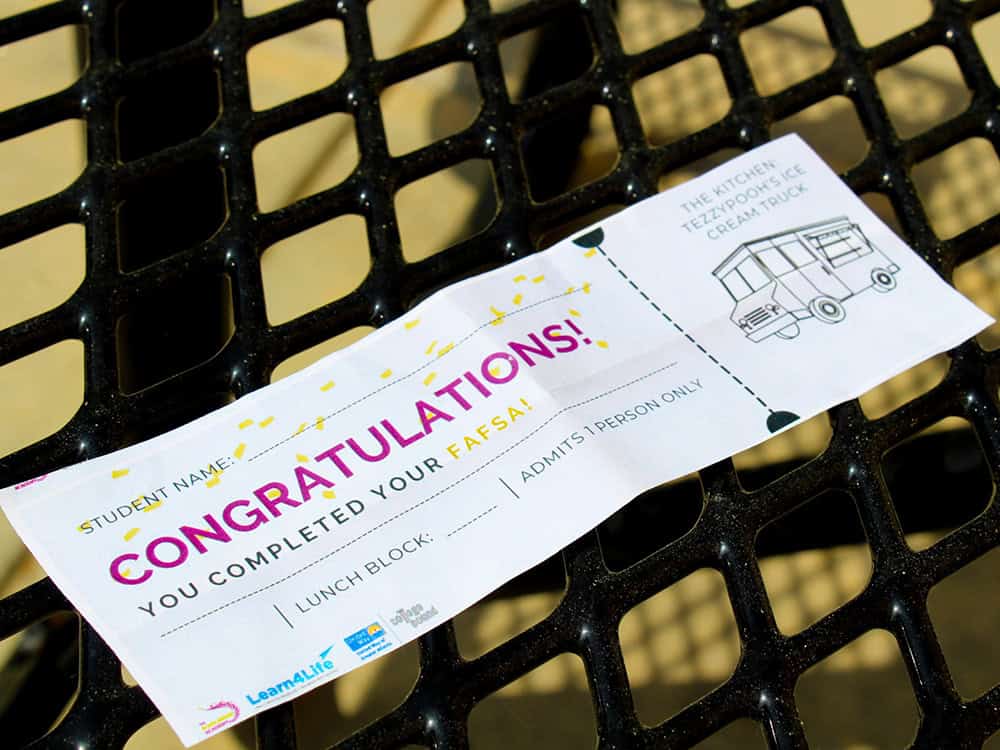
Financial barriers are one of the main reasons students don’t earn a college degree, and completing the Free Application for Federal Student Aid (FAFSA) is often the first step to getting the aid that makes college possible.

Our College Bound advisors are in schools three days a week, helping students and their families navigate the financial aid process and offering FAFSA help.

>> READ MORE: Demystifying the Financial Aid Process, Making College Dreams a Reality

For many, questions about income, taxes, and Social Security numbers make the form feel intimidating, and some students worry that filling it out means taking on debt. In reality, the FAFSA is simply a gateway to financial support, including free aid like the Pell Grant and many institutional and external scholarships.

Last year, completing the FAFSA unlocked an average of $16,810 in aid per undergraduate student. Seniors from the lowest-income households who complete it are more than twice as likely to enroll in college.

Christina remembers how daunting the FAFSA seemed. Her mom didn’t know much about college applications, so having counselors to ask questions about the paperwork helped. Now, with a year of college under her belt, she’s prepared to help her younger siblings navigate the process too if they decide to pursue college.

She thinks one of her siblings definitely will want to follow in her college footsteps. “I will tell them to complete the FAFSA and get it done, like, as soon as they open it.”

Be the reason a student enrolls.

“Imposter syndrome is the main thing that holds a lot of these students back, and lack of knowledge — not knowing that there’s opportunities, resources and all those things available to them,” said Trishana Wilson, a College Bound advisor through The Scholarship Academy.

“Your money, your time, your support is making all the worlds of difference. I have a student that just got a full ride to Georgia State. He’ll be able to go to Georgia State this fall, and the only thing he has to cover now is his dining plan. I have another student who just recently won another scholarship through the Metro Atlanta Relocation Center. She’s taking this Spelman College with her. The students are excited, they’re working hard, and they’re waiting for August.”

Your support of United Way of Greater Atlanta’s college and career programs makes it possible for us to help students like Christina and so many others picture themselves in college for the first time, then go on to achieve that goal. Help us put education and opportunity in reach when you donate today.

Thank you !

Christina Ligons is wrapping up her freshman year of college. She’s completed classes like history and psychology — that one was difficult at first, but she grew to enjoy it. Outside of class, she just joined the student government association as the secretary of activities, and she takes photos around campus and works on podcasts with the MCTV club. She’s studying history education to become a teacher. A public relations minor is also on the table, just to keep her options open.

Just a year ago, as a senior in high school, she didn’t even think she would be in school.

Christina is one of the hundreds of high school seniors we help reach college each year through our College Bound program. It’s so much more than help with forms and deadlines — it’s connecting students to advisors who have been in their shoes and can show them what’s possible. They’re the reason Christina is at Miles College today.

The next step after high school matters.

United Way of Greater Atlanta partners with The Scholarship Academy and Learn4Life to put College Bound advisors in eight Title I high schools around Greater Atlanta.

For these high school seniors on the brink of graduation, the stakes are high. By 2031, 85% of jobs in Georgia will require some education beyond high school. Across their lifetime, college students will earn about two and a half times more than their peers with only a high school diploma — like it or not, a postsecondary education remains one of the most reliable ways to help young adults earn more, find stable work, and create a stronger financial future than the one they grew up with. But currently, only 27% of students in Greater Atlanta are on track to earn a degree or credential.

>> RELATED: Fresh-Squeezed Talent: Jasiah’s Apprenticeship Story

“When I was first filling out the FAFSA, I didn’t think it was going to be useful because I didn’t think I was going to be going to college, honestly,” Christina remembers.

As a first-generation college student, she didn’t have anyone in her family to ask for advice. But she remembers meeting a College Bound program advisor in her high school, hearing about his own college experience, and starting to consider applying herself.

“I realized that if I do this, I’ll be the first one. I’ll have something for my siblings to look up to and for my mom to be proud of,” she said. Her advisor’s help gave her the push she needed to start applying to schools.

“We are an amazing resource, in particular for students who don’t come from college-going culture or families that have a lot of resources that can help them fulfill their postsecondary goals and dreams,” said Dr. Kristin Hemingway, Director of Programs and Outreach at our College Bound partner The Scholarship Academy. “It’s very important for all of us to have support in this process, and it can be hard to be supported by people who haven’t experienced the process.”

Paying for college shouldn’t be hard. The first step? Your FAFSA.

Financial barriers are one of the main reasons students don’t earn a college degree, and completing the Free Application for Federal Student Aid (FAFSA) is often the first step to getting the aid that makes college possible.

Our College Bound advisors are in schools three days a week, helping students and their families navigate the financial aid process and offering FAFSA help.

>> READ MORE: Demystifying the Financial Aid Process, Making College Dreams a Reality

For many, questions about income, taxes, and Social Security numbers make the form feel intimidating, and some students worry that filling it out means taking on debt. In reality, the FAFSA is simply a gateway to financial support, including free aid like the Pell Grant and many institutional and external scholarships.

Last year, completing the FAFSA unlocked an average of $16,810 in aid per undergraduate student. Seniors from the lowest-income households who complete it are more than twice as likely to enroll in college.

Christina remembers how daunting the FAFSA seemed. Her mom didn’t know much about college applications, so having counselors to ask questions about the paperwork helped. Now, with a year of college under her belt, she’s prepared to help her younger siblings navigate the process too if they decide to pursue college.

She thinks one of her siblings definitely will want to follow in her college footsteps. “I will tell them to complete the FAFSA and get it done, like, as soon as they open it.”

Be the reason a student enrolls.

“Imposter syndrome is the main thing that holds a lot of these students back, and lack of knowledge — not knowing that there’s opportunities, resources and all those things available to them,” said Trishana Wilson, a College Bound advisor through The Scholarship Academy.

“Your money, your time, your support is making all the worlds of difference. I have a student that just got a full ride to Georgia State. He’ll be able to go to Georgia State this fall, and the only thing he has to cover now is his dining plan. I have another student who just recently won another scholarship through the Metro Atlanta Relocation Center. She’s taking this Spelman College with her. The students are excited, they’re working hard, and they’re waiting for August.”

Your support of United Way of Greater Atlanta’s college and career programs makes it possible for us to help students like Christina and so many others picture themselves in college for the first time, then go on to achieve that goal. Help us put education and opportunity in reach when you donate today.

Thank you for contacting us.
We have received your message and will get back to you shortly.

Thank you.

College didn’t feel possible — until it did

[]

Thank you for contacting us.

We have received your message and will get back to you soon!

Contact us