What a school supply list reveals about inequity in the classroom

Understanding the opportunity gap in education
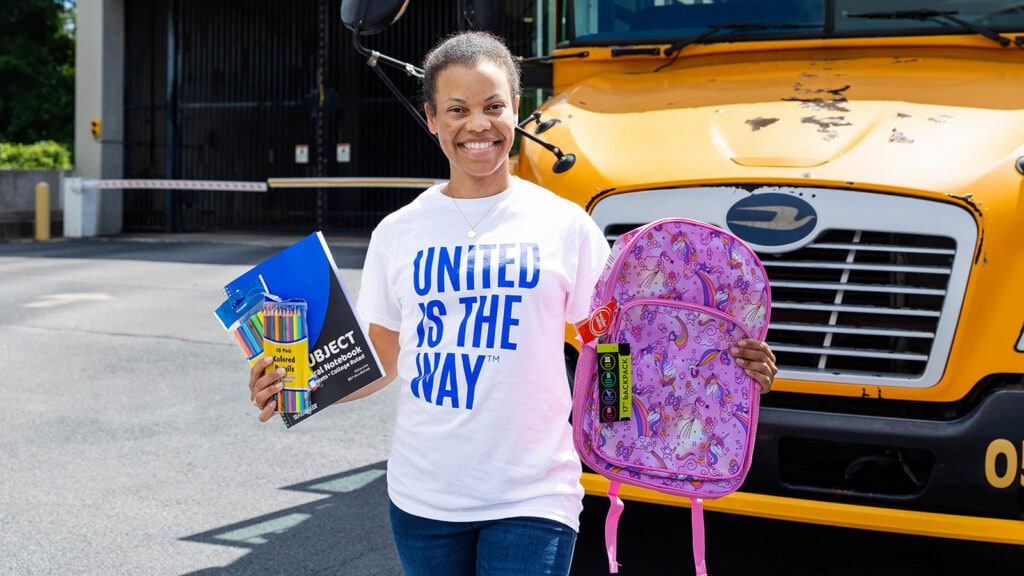
Volunteer holds up school supplies at one of United Way of Greater

Every school year begins with promise, but for many students in Greater Atlanta, it also begins with barriers. A backpack full of supplies — or the lack of one — can determine whether a student starts the year ready to learn or already at a disadvantage. Access to resources and outside stressors both have the power to shape a school year for a student.

The good news? There are solutions to this inequity in the classroom that everyone can help address. But first, let’s talk about what makes a school supply list so stressful for many families across our region.

The back-to-school burden

Inequity in the classroom can start before the first bell rings — when families receive their school supply lists at the beginning of the year.

In 2025, families planned to spend an average of $858.07 on back-to-school supplies and the clothes and technology that go with it, according to the National Retail Federation. That’s the equivalent of more than two weeks of groceries, or the combined cost of a car payment, insurance, and gas for the entire month. For families working hard to make ends meet, a school supply list represents one of countless impossible financial choices families face.

>> LEARN MORE: Financial hardship for hardworking families in Georgia

According to United Way Worldwide, 16 million students across the U.S. lack access to essential school supplies. And when students show up without what they need, students may have lower confidence, be less prepared to learn than their peers, and even miss more school days. Too often, the burden of filling in the gaps falls on teachers, who may have to spend out-of-pocket on classroom supplies.

The opportunity gap in education vs. the achievement gap: What’s the difference?

While access to school supplies is critical to starting school strong, inequity in the classroom doesn’t stop there. It’s part of a larger issue known as the opportunity gap in education.

This opportunity gap refers to the unequal access students have to opportunities that shape academic success. This includes access to school supplies, yes, but also the quality of teachers and instruction, stressors like food or housing insecurity, and early interventions like early learning that can impact a student’s learning trajectory for the rest of their life.

>> RELATED: Overcoming housing insecurity: A home for Taquana

These disparities shape a student’s educational journey from the very beginning. Consider this:

  • 1 in 4 students can’t afford school supplies at the start of the school year
  • 18,000 students in the thirteen-county Greater Atlanta region experienced homelessness last year
  • 384,000 Greater Atlanta students live in poverty

These are clear examples of the opportunity gap in action across our region.

The achievement gap is what happens as a result. It measures the difference in academic performance — such as reading and math scores — between groups of students. For economically disadvantaged students and their peers, that gap is widening.

According to Neighborhood Nexus, in Greater Atlanta, only 21% of 3rd graders from economically disadvantaged households can read proficiently, compared to 70% of their peers who are better off financially. That’s a 49 percentage-point gap.

It’s a myth that the achievement gap can be solved by expecting students to just work harder. In fact, many educators and advocates are moving away from the term altogether because it can imply that disparities are rooted in effort rather than access. Because of the other factors at play for students, that just isn’t true.

You cannot close the achievement gap without first closing the opportunity gap. Addressing inequity in the classroom means tackling root causes — not symptoms.

Solving inequities in the classroom: A systems approach

So what are real, actionable solutions for resource allocation inequity in U.S. public schools?

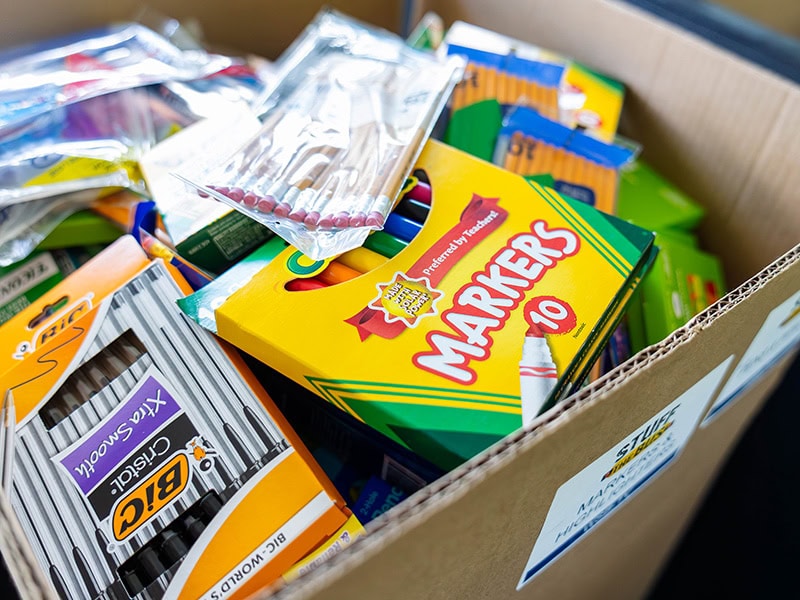
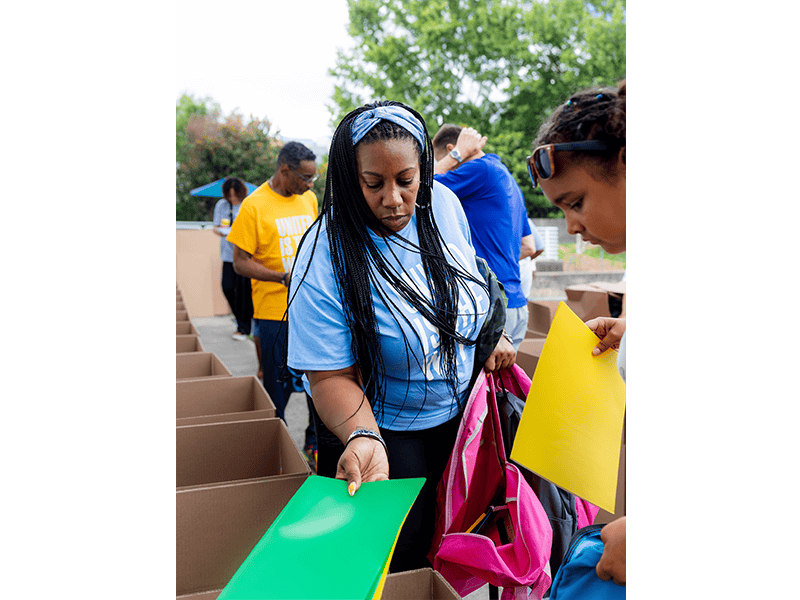
One of the simplest and most immediate ways an individual can make a difference is through backpack drives. Initiatives like United Way of Greater Atlanta and WSB-TV’s Stuff the Bus, an online donation and backpack drive, help thousands of Greater Atlanta students start the school year with everything they need to succeed. Last year, we stuffed 7,200 bookbags and collected supplies for an additional 14,000 students in need. But we know school supplies are just the beginning.
Addressing inequity in the classroom requires both immediate support and long-term solutions. Here are some ways United Way is committed to making lasting change:

  • Start with our littlest learners. Increase access to early learning through scholarships to quality child care centers and free community preschool classes.
  • Turn strong readers into leaders. Build reading skills by investing in data-backed literacy instruction and qualified teachers through initiatives like Literacy and Justice for All, our pilot partnership with Marietta City Schools that we are now scaling throughout the region.
  • Make school a place families turn to for support. Bring more resources into schools, such as food through free produce markets or no-cost mental health treatment.
  • End student homelessness. Help place students identified as homeless through the school district in permanent, safe housing so their learning is not disrupted.
  • Involve a child’s first teacher — their parents. Strengthen family engagement, empowering parents to be more involved in their student’s education and extend learning opportunities at home.

>> Learn more about our Strong Learners work

Why it matters: Help close the gap

Success in early education is one of the strongest predictors of long-term outcomes, like high school graduation and college and career attainment. When inequity in the classroom goes unaddressed, it doesn’t just impact the school year ahead — it can shape a student’s entire life.

But the opposite is also true: By investing early and consistently, from backpack drives to district-level change, we can change outcomes for children and communities.

Together, we can help make sure every student, no matter their background, has the tools they need to succeed. When we close the opportunity gap in education, we create a future where every student has a fair shot at success. Donate today and help power students forward this school year.

Thank you !

Every school year begins with promise, but for many students in Greater Atlanta, it also begins with barriers. A backpack full of supplies — or the lack of one — can determine whether a student starts the year ready to learn or already at a disadvantage. Access to resources and outside stressors both have the power to shape a school year for a student.

The good news? There are solutions to this inequity in the classroom that everyone can help address. But first, let’s talk about what makes a school supply list so stressful for many families across our region.

The back-to-school burden

Inequity in the classroom can start before the first bell rings — when families receive their school supply lists at the beginning of the year.

In 2025, families planned to spend an average of $858.07 on back-to-school supplies and the clothes and technology that go with it, according to the National Retail Federation. That’s the equivalent of more than two weeks of groceries, or the combined cost of a car payment, insurance, and gas for the entire month. For families working hard to make ends meet, a school supply list represents one of countless impossible financial choices families face.

>> LEARN MORE: Financial hardship for hardworking families in Georgia

According to United Way Worldwide, 16 million students across the U.S. lack access to essential school supplies. And when students show up without what they need, students may have lower confidence, be less prepared to learn than their peers, and even miss more school days. Too often, the burden of filling in the gaps falls on teachers, who may have to spend out-of-pocket on classroom supplies.

The opportunity gap in education vs. the achievement gap: What’s the difference?

While access to school supplies is critical to starting school strong, inequity in the classroom doesn’t stop there. It’s part of a larger issue known as the opportunity gap in education.

This opportunity gap refers to the unequal access students have to opportunities that shape academic success. This includes access to school supplies, yes, but also the quality of teachers and instruction, stressors like food or housing insecurity, and early interventions like early learning that can impact a student’s learning trajectory for the rest of their life.

>> RELATED: Overcoming housing insecurity: A home for Taquana

These disparities shape a student’s educational journey from the very beginning. Consider this:

  • 1 in 4 students can’t afford school supplies at the start of the school year
  • 18,000 students in the thirteen-county Greater Atlanta region experienced homelessness last year
  • 384,000 Greater Atlanta students live in poverty

These are clear examples of the opportunity gap in action across our region.

The achievement gap is what happens as a result. It measures the difference in academic performance — such as reading and math scores — between groups of students. For economically disadvantaged students and their peers, that gap is widening.

According to Neighborhood Nexus, in Greater Atlanta, only 21% of 3rd graders from economically disadvantaged households can read proficiently, compared to 70% of their peers who are better off financially. That’s a 49 percentage-point gap.

It’s a myth that the achievement gap can be solved by expecting students to just work harder. In fact, many educators and advocates are moving away from the term altogether because it can imply that disparities are rooted in effort rather than access. Because of the other factors at play for students, that just isn’t true.

You cannot close the achievement gap without first closing the opportunity gap. Addressing inequity in the classroom means tackling root causes — not symptoms.

Solving inequities in the classroom: A systems approach

So what are real, actionable solutions for resource allocation inequity in U.S. public schools?

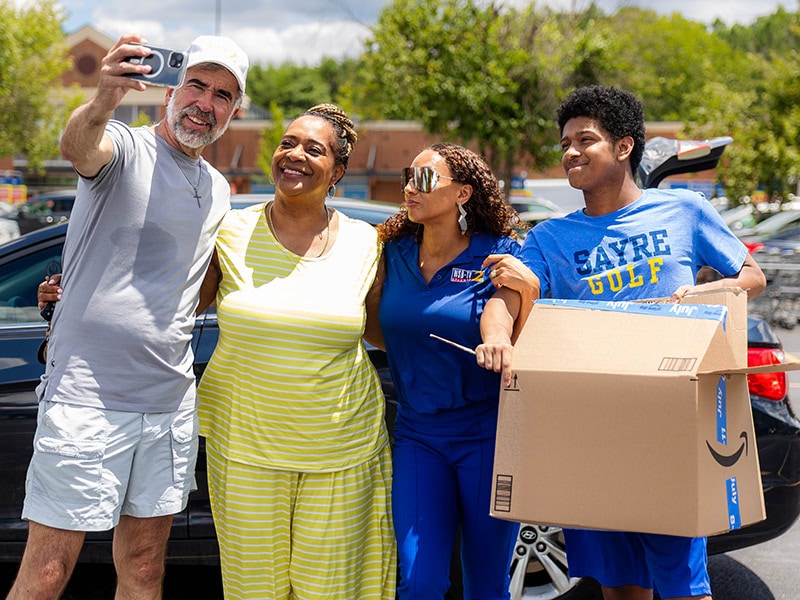
One of the simplest and most immediate ways an individual can make a difference is through backpack drives. Initiatives like United Way of Greater Atlanta and WSB-TV’s Stuff the Bus, an online donation and backpack drive, help thousands of Greater Atlanta students start the school year with everything they need to succeed. Last year, we stuffed 7,200 bookbags and collected supplies for an additional 14,000 students in need. But we know school supplies are just the beginning.
Addressing inequity in the classroom requires both immediate support and long-term solutions. Here are some ways United Way is committed to making lasting change:

  • Start with our littlest learners. Increase access to early learning through scholarships to quality child care centers and free community preschool classes.
  • Turn strong readers into leaders. Build reading skills by investing in data-backed literacy instruction and qualified teachers through initiatives like Literacy and Justice for All, our pilot partnership with Marietta City Schools that we are now scaling throughout the region.
  • Make school a place families turn to for support. Bring more resources into schools, such as food through free produce markets or no-cost mental health treatment.
  • End student homelessness. Help place students identified as homeless through the school district in permanent, safe housing so their learning is not disrupted.
  • Involve a child’s first teacher — their parents. Strengthen family engagement, empowering parents to be more involved in their student’s education and extend learning opportunities at home.

>> Learn more about our Strong Learners work

Why it matters: Help close the gap

Success in early education is one of the strongest predictors of long-term outcomes, like high school graduation and college and career attainment. When inequity in the classroom goes unaddressed, it doesn’t just impact the school year ahead — it can shape a student’s entire life.

But the opposite is also true: By investing early and consistently, from backpack drives to district-level change, we can change outcomes for children and communities.

Together, we can help make sure every student, no matter their background, has the tools they need to succeed. When we close the opportunity gap in education, we create a future where every student has a fair shot at success. Donate today and help power students forward this school year.

Thank you for contacting us.
We have received your message and will get back to you shortly.

Thank you.

[]

Thank you for contacting us.

We have received your message and will get back to you soon!

Contact us